
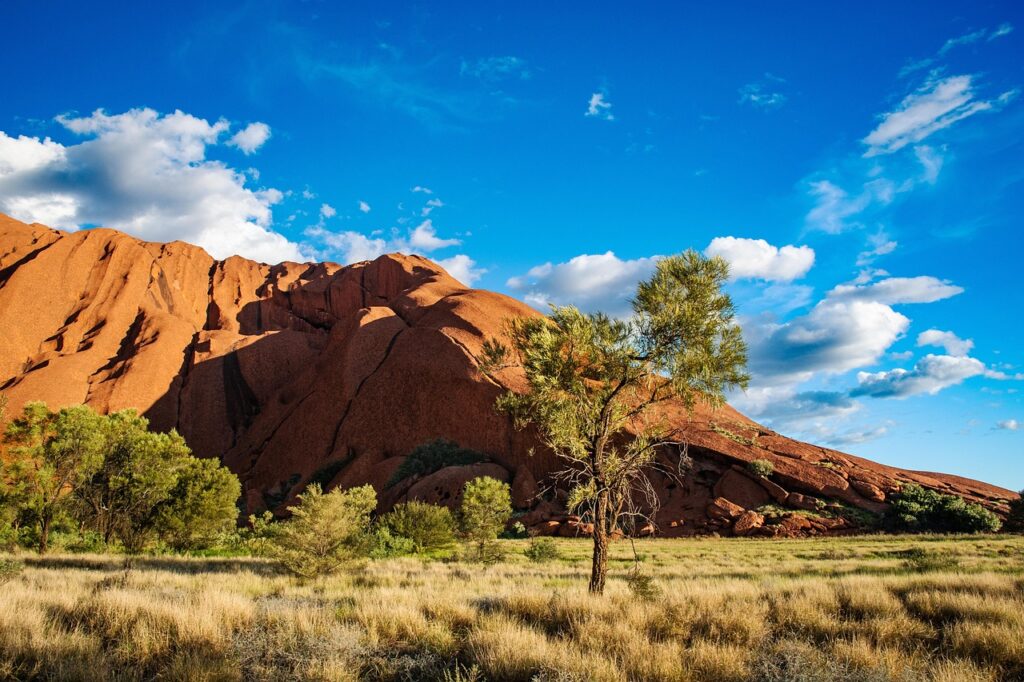
From the vibrant blue of the Great Barrier Reef, we journey inland to the deep reds and oranges of the Australian outback. The focus here is Uluru, formerly known as Ayers Rock. This monolithic sandstone formation is more than just a massive rock; it is a profound spiritual landmark for the Anangu people and the centerpiece of a landscape unlike any other on Earth. Visiting Uluru is a journey into Australia's ancient history and its spiritual core.
Uluru sits within the Uluru-Kata Tjuta National Park in the southwest corner of the Northern Territory, a region famously known as the Red Centre. The entire area is characterized by vast, flat desert landscapes, punctuated only by these incredible geological formations.
The climate is one of extremes: scorching hot summers and surprisingly cold winter nights.
The personality of the region is one of quiet majesty, deep cultural significance, and immense scale. The Anangu people are the traditional custodians of the land, and the park is managed jointly with Parks Australia. Visitors are asked to respect the sacred nature of the site, particularly by refraining from climbing Uluru.
The primary appeal of Uluru and its surrounding park is the profound sense of place and the opportunities for meaningful exploration.
The Sunset and Sunrise Spectacle
Watching Uluru change colors is the region's main attraction. As the sun rises or sets, the rock cycles through shades of deep ochre, orange, red, and sometimes even violet, depending on the cloud cover and angle of the light. Dedicated viewing platforms are set up to give visitors the perfect, uninterrupted vantage point.
Exploring Kata Tjuta (The Olgas)
Just 40 kilometers west of Uluru, Kata Tjuta (meaning 'many heads') is a collection of 36 magnificent dome-shaped rocks. These formations are often overlooked but are arguably just as spectacular. The Valley of the Winds Walk is a challenging but rewarding hike that takes you deep into the domes, revealing breathtaking views and an incredible sense of isolation.
The Base Walk and Cultural Centre
Walking around the entire 10-kilometer base of Uluru allows you to truly grasp its size and appreciate the subtle features, waterholes, and caves that are sacred to the Anangu people. The Mala Walk is a popular section of the base walk, often accompanied by ranger-led tours that explain the geology, flora, fauna, and local Tjukurpa (traditional law and creation stories). The Uluru-Kata Tjuta Cultural Centre is the essential first stop to understand the history and cultural significance of the park.
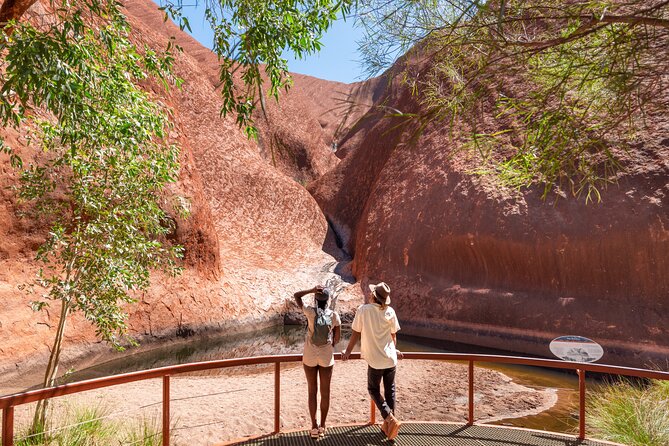
You should visit Uluru to connect with a landscape that holds 600 million years of history and thousands of years of continuous human culture. It is one of the world's most recognizable natural landmarks, but seeing it in person provides a profound sense of peace and wonder that no photograph can capture.
Visiting Uluru is an opportunity to show respect to the planet's history and its Indigenous cultures. It is a chance to slow down, witness the immense beauty of the Australian outback, and experience a spiritual landscape that few places on earth can rival.
Your expert source for booking the best Aussie flights, hotels, and activities at great prices.
Get in touch with our tour & trip accommodation provider.
Subscribe to our free newsletter and get 15% discount in your next booking.
Copyright © 2025 Holiday Escapes Australia . All Rights Reserved
We provide travel information and partner links only. All bookings and payments are handled by third-party providers. Prices, availability, and services are subject to change. Some links may earn us a commission at no extra cost to you.